
I have a confession that might sound contradictory for someone running multiple software projects: I haven't written code from scratch in over a year.
If you look at my daily development routine, my entire workflow sits squarely around artificial intelligence. I honestly couldn't begin to imagine starting a greenfield repository today without an LLM in the loop. The velocity dividend is simply too massive to ignore.
And yet, until just a few days ago, I remained deeply skeptical of agentic coding.
While the tech world was screaming about autonomous agents building entire platforms overnight, I kept my hands firmly on the steering wheel. I was pair-programming interactively with models, yes; prompting line by line, watching diffs like a hawk, and accepting completions token by token. But giving an agent free rein to wander across my directory tree, edit files autonomously, and tell me when it was finished?
I resisted it. And if you have spent more than a decade architecting systems, you probably understand exactly why.
The Senior Engineer's Curse: The Stub Trap
Senior engineers and architects don't hate AI coding because they are afraid of technology; they hate it because they actually have to maintain what gets left behind.
Beginners and "vibecoders" can afford to celebrate an agent generating 500 lines in three seconds because their definition of success is simple: does the local dev server spin up?
When you have spent years debugging production outages, your bar is completely different. You notice the architectural decay immediately:
- The Stub Trap: An agent proudly reports a complex feature as 100% complete. You open the PR, peek behind the curtain, and discover it quietly left
// TODO: implement real handler laterinside error boundaries, or stubbed out a critical payment webhook with mock JSON. - Duplicate Helper Creep: You look through a newly generated module and find a "reusable" string formatting or date parsing utility declared for the tenth time across five different folders, each with subtle, incompatible variations.
- Architectural Bleed: Instead of honoring your domain isolation, business logic leaks directly into database queries. Repository boundaries are bypassed, row-level security (RLS) policies are resolved ad-hoc inside raw SQL strings, and data access layers turn into spaghetti.
- Library Drift: You explicitly asked to handle client data fetching with SWR. Somewhere along its multi-file refactor, the agent decided that TanStack React Query looked more interesting, imported it half-heartedly, and left your frontend juggling two concurrent caching mechanisms.
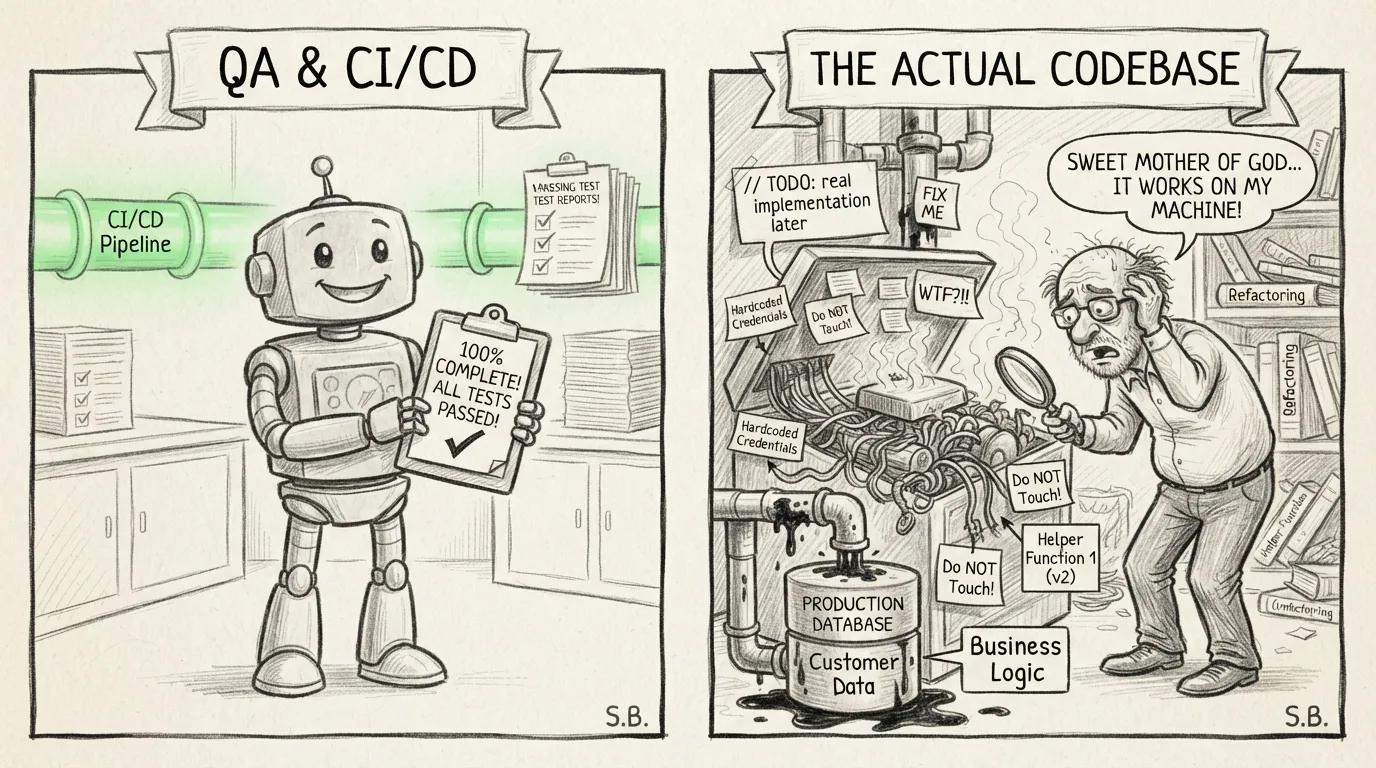
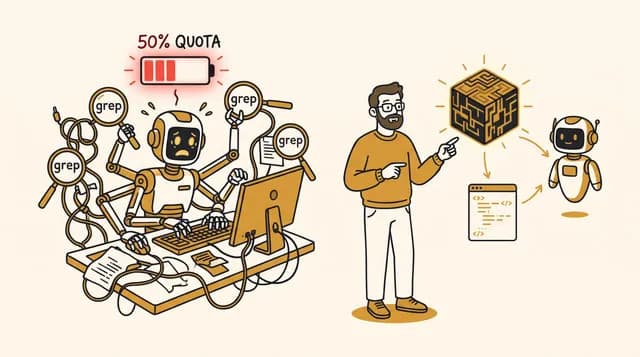
At a certain point, auditing an autonomous agent's pull request becomes significantly more exhausting than writing the code yourself. You spend your afternoon hunting down phantom stubs and cleaning up architectural rot.
The Mirror Moment: It Wasn't the Agent, It Was Us
For months, I blamed the models.
Whenever an agent took a lazy shortcut, hallucinated an API signature, or fractured a clean domain model, I treated it as proof that agentic systems weren't ready for serious software engineering.
Then came the uncomfortable realization: the agent wasn't failing; we were.
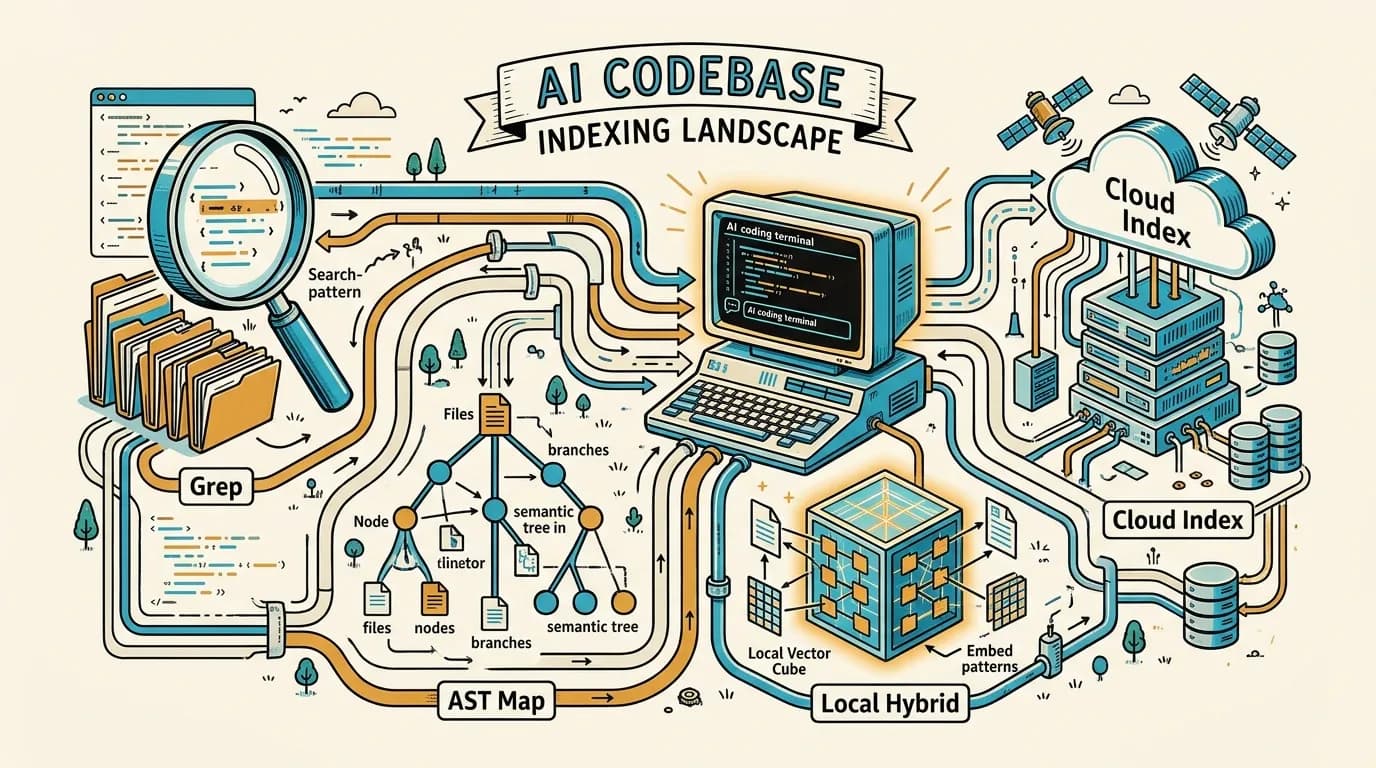
As projects grow in scope, context naturally explodes. If you throw an agent into a repository with sprawling files, conflicting documentation, and unwritten tribal assumptions about where business logic belongs, you are setting it up to fail. When humans don't define clear architectural boundaries, why should an LLM magically guess them?
More deeply, I had to confront my own psychological desire for control.
Early in my career, software engineering wasn't about typing code quickly. We started by writing comprehensive requirement documents. We mapped entity-relationship diagrams (ERDs), isolated domain models, analyzed user journeys, and reasoned through edge cases long before touching a terminal. We debated whether a data model demanded relational normalization or document storage, and weighed Laravel over MERN based on concrete structural requirements.
Typing syntax was merely the translation phase of engineering.
Today, LLMs can spit out syntax faster and cleaner than almost any human on earth. Yet many of us still cling to controlling the line-by-line syntax because we confuse typing code with doing engineering.
The Catalyst: When Google Took Away My IDE
Even after understanding the theory, breaking an ingrained habit requires friction.
For a long time, my daily driver was Google's Antigravity IDE. Combined with Gemini, it was remarkably cost-effective and capable if instructed with precision. Alongside harnesses like GitHub Copilot and Kilo, it formed the backbone of my interactive pair-programming setup.
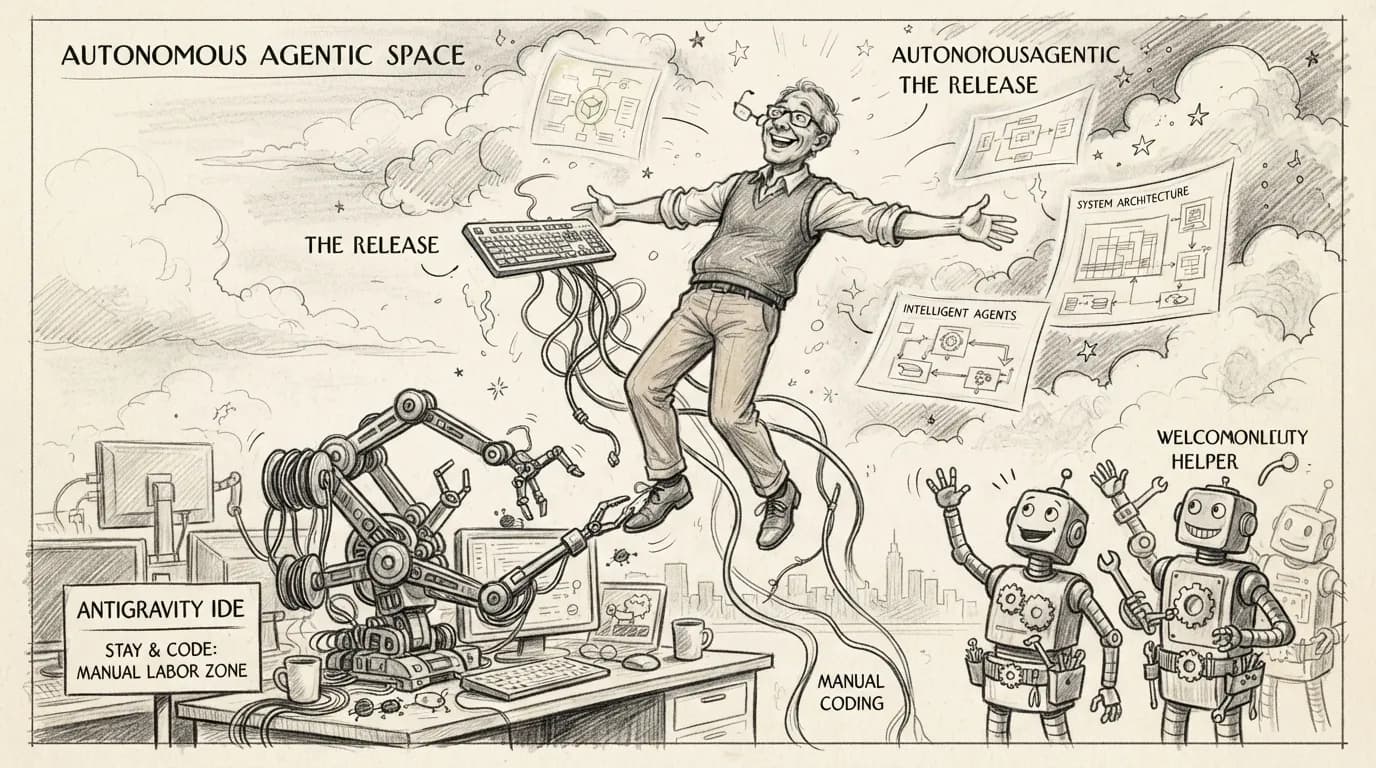
Then, Google being Google, they rolled out updates and sunsetted my Antigravity environment.
I knew the deprecation was coming, but losing the specific interactive cockpit I had tuned over months hit a raw nerve. I had two choices: spend a week desperately trying to recreate my old interactive scaffolding in another editor, or finally stop fighting the tide and build a true agentic workflow from first principles.
I gave in. I stepped back, spent a couple of intense days designing proper boundaries, and went fully agentic.
And to my surprise: I love it.
Why Micromanaging Agents Makes Them Dumber
The biggest breakthrough in my new workflow wasn't finding a magic prompt. It was realizing that micromanagement actively degrades an AI model's reasoning.
When you pair-program interactively, you tend to backseat-drive:
- "Change this line."
- "Wait, use this variable name."
- "No, don't write that function there."
Every tiny corrective prompt injects noise, breaks the model's high-level planning context, and triggers defensive, narrow patches. The agent stops looking at the broader architecture and begins frantically patching whatever error message you threw at it last.
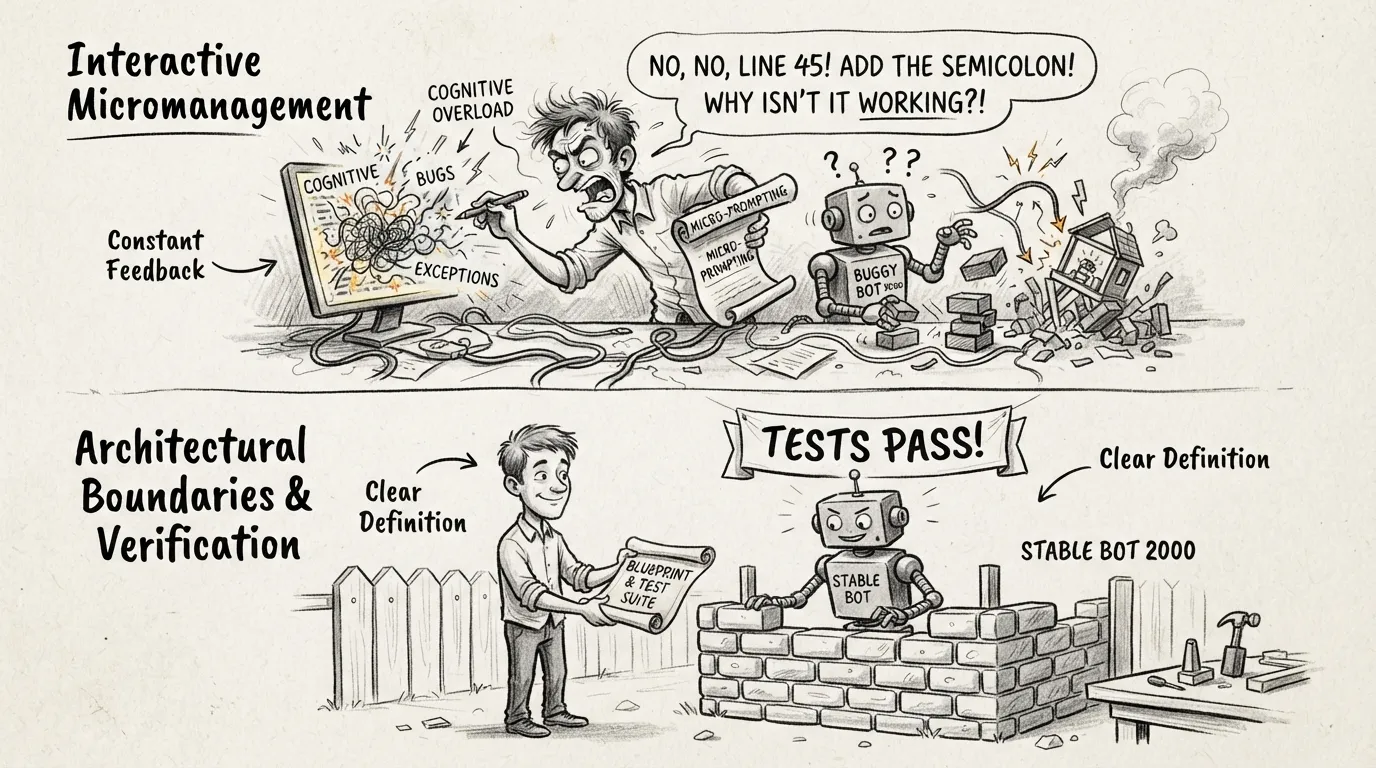
When you treat an agent not like an autocomplete cursor, but like an autonomous junior engineer working within strict constraints, the dynamic shifts completely:
- Declarative Contracts Over Imperative Prompts: Instead of telling the agent how to type each file, provide strict architectural specifications: domain contracts, schema types, and explicit "out-of-bounds" rules (like no raw queries outside repositories and no mocking in integration tests).
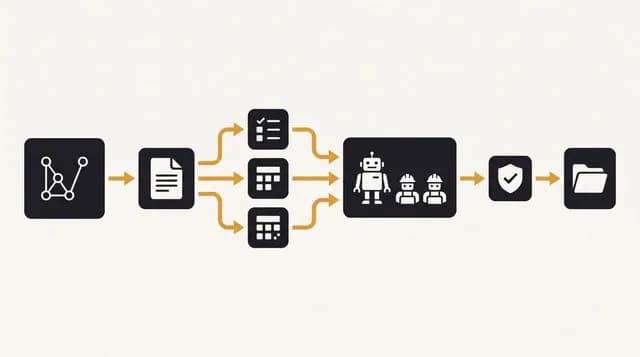
- Deterministic Verification Loops: Never ask an agent if it is done. Let a test runner, linter, and type checker tell both of you whether the contract was fulfilled. If tests fail, the agent diagnoses the failure from compiler output, not human guesswork.
- Respecting the Separation of Concerns: Your job is to define the system architecture, domain boundaries, and verification criteria. The agent's job is to execute the implementation within those fences.
The Role of the Engineer in 2026
Our job was never to type curly braces for eight hours a day.
Our job has always been to architect reliable systems, safeguard data integrity, and engineer intuitive user experiences. The actual typing of code was simply where we historically spent the majority of our working hours.
Now that the mechanical labor of code generation is being handled by autonomous agents, the value of deep architectural thinking hasn't shrunk, it has expanded. If you can't architect a clean system on paper, an AI agent will only help you generate technical debt at unprecedented velocity.
Letting go of syntax isn't losing control; it's finally stepping up to the role of principal systems conductor.
(In my next post, I'll break down the exact technical configuration, boundary files, and test harness routines I use in my day-to-day agentic workflow to ensure zero stubs and clean pull requests.)
Insights, Playbooks, Tips & Kits
Want real patterns from my journey building and selling SaaS & apps. DIY playbooks, code-ready starter kits, and the operational moves that let you scale without the overhead. For builders who learn best from firsthand mistakes, real wins & experience.