
People keep saying written content is dying because nobody reads long articles anymore.
They are looking at the wrong reader.
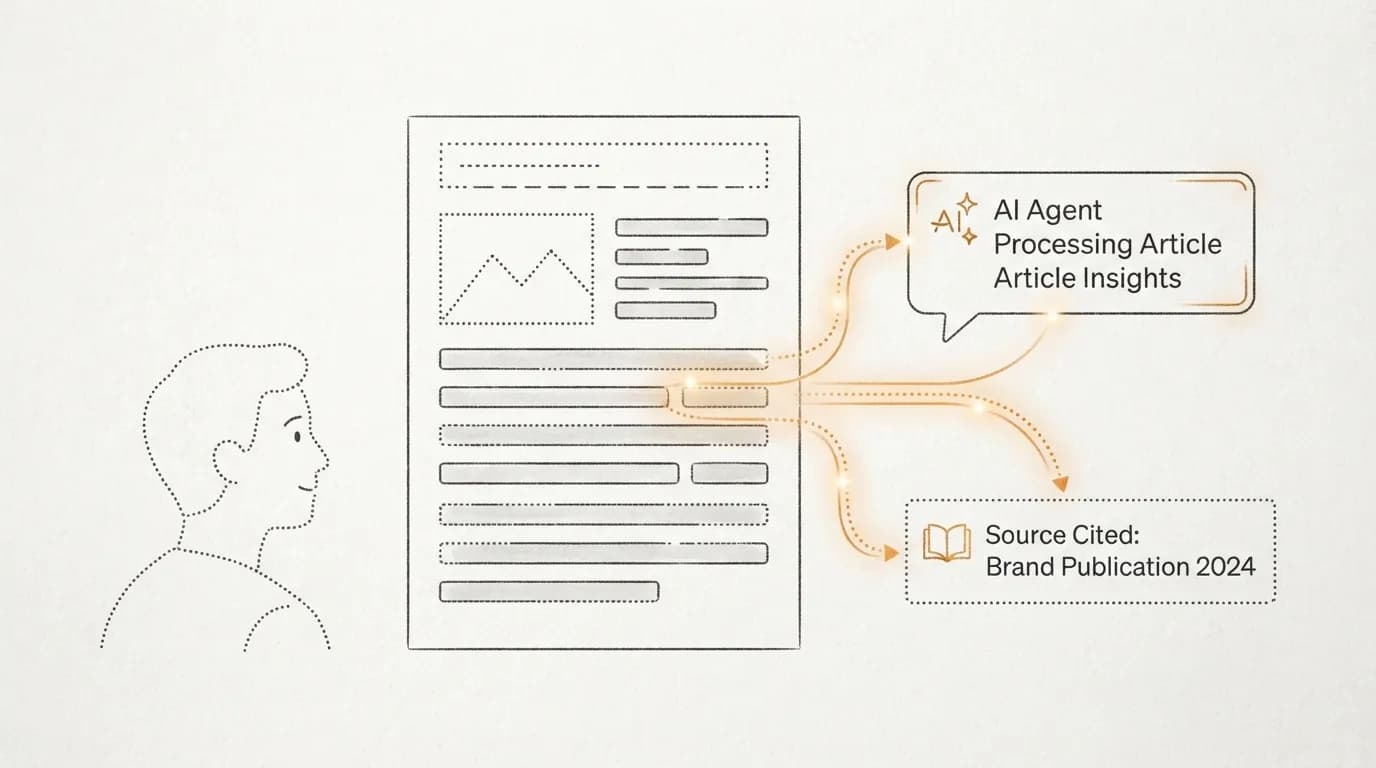
Today, information is increasingly consumed by AI agents first, synthesized into a clean summary, and then handed to the end consumer, who is still a human deciding which brand to trust. Text is not dying. It is entering its prime.
If your brand does not publish clear, structured, owned writing on the web, search engines cannot index your expertise and AI agents have nothing to train on or cite when someone asks for a recommendation.
That realization is why we are building an AI blogging platform for SEO and AEO (currently under the working name Simple Blogs). The name and public launch date are not finalized yet, but the system is already alive: this entire blog is powered by it, and we are making it better every single day.
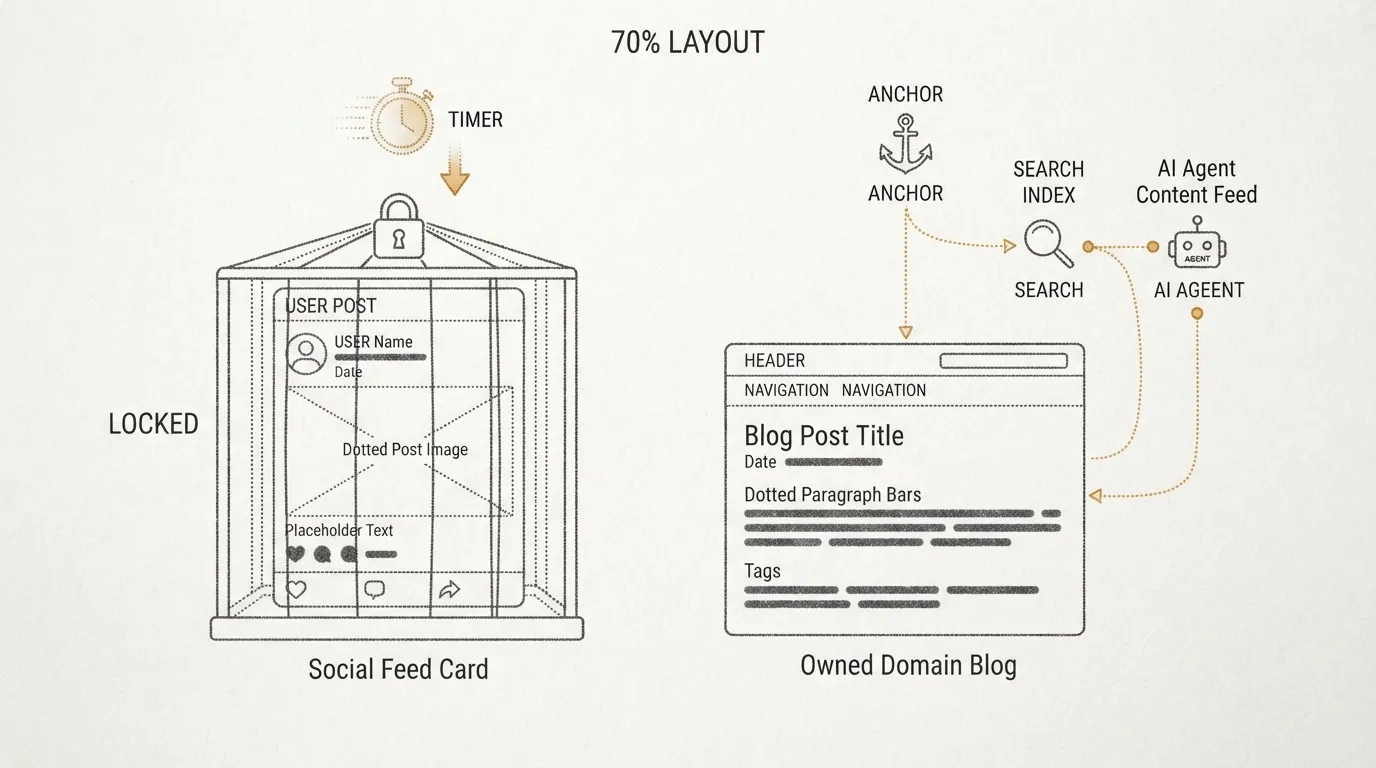
Social Media Is Rented Reach. Text Is Forever Content.
Every founder knows the social media treadmill. You spend hours writing hooks for LinkedIn, X, or Threads, chasing engagement spikes that disappear in 48 hours.
Social media has real value for building presence, but the distribution channels belong to each platform's algorithm. If a feed changes tomorrow, your reach resets to zero.
Owned text on your own domain works differently:
- It compounds over time: A well-structured article published today can bring in search traffic and brand mentions for years.
- It feeds AI recommendations: Modern AI assistants retrieve, evaluate, and synthesize web articles to decide which products to recommend. Your blog posts are the training and citation layer for your brand.
- It builds your public knowledge base: Having a dedicated home on your own domain where your business's public knowledge lives gives both customers and AI agents a single source of truth to verify who you are and what you do.
How SEO and AEO Work Today
Traditional SEO used to reward teams that stuffed keywords into generic templates and chased backlinks. That playbook is breaking down fast.
According to Similarweb's 2026 AI Brand Visibility research, zero-click search rates climbed from 56 percent to 69 percent after AI Overviews launched, and 35 percent of consumers now turn to AI tools first during initial product discovery. More importantly, brands that actually get cited inside AI answers earn 35 percent more organic clicks than competitors who are left out.
Meanwhile, HubSpot's 2026 AEO citation data shows that B2B and mixed-model brands win most of their AI citations through structured blog content: clear definitions, honest comparisons, and deep topic explainers.
In other words, how SEO works today is inseparable from Answer Engine Optimization (AEO), and it rests on four pillars:
- E-E-A-T (Experience, Expertise, Authoritativeness, and Trustworthiness): As Google's people-first content guidelines emphasize, trust and first-hand experience matter more than ever when anyone can generate generic copy. Every brand, business, and founder should invest in E-E-A-T by sharing real lessons, clear authorship, and verifiable facts.
- Real search intent first: Answering the exact questions humans and AI agents ask, rather than guessing clever headlines.
- Clean technical structure: Strict metadata limits, semantic headings, fast page loads, and keyword-bound image alt text.
- Candid, specific substance: Real trade-offs, comparison tables, and a permanent home for your business's public knowledge instead of padded fluff.
Putting Agency-Grade Engineering in Non-Technical Hands
Most founders and small business owners know they need this kind of forever content. The problem is execution.
Hiring a full digital agency before you have steady revenue is expensive, and doing keyword research, schema tuning, metadata counting, and visual creation by hand eats up days you should spend building your product.
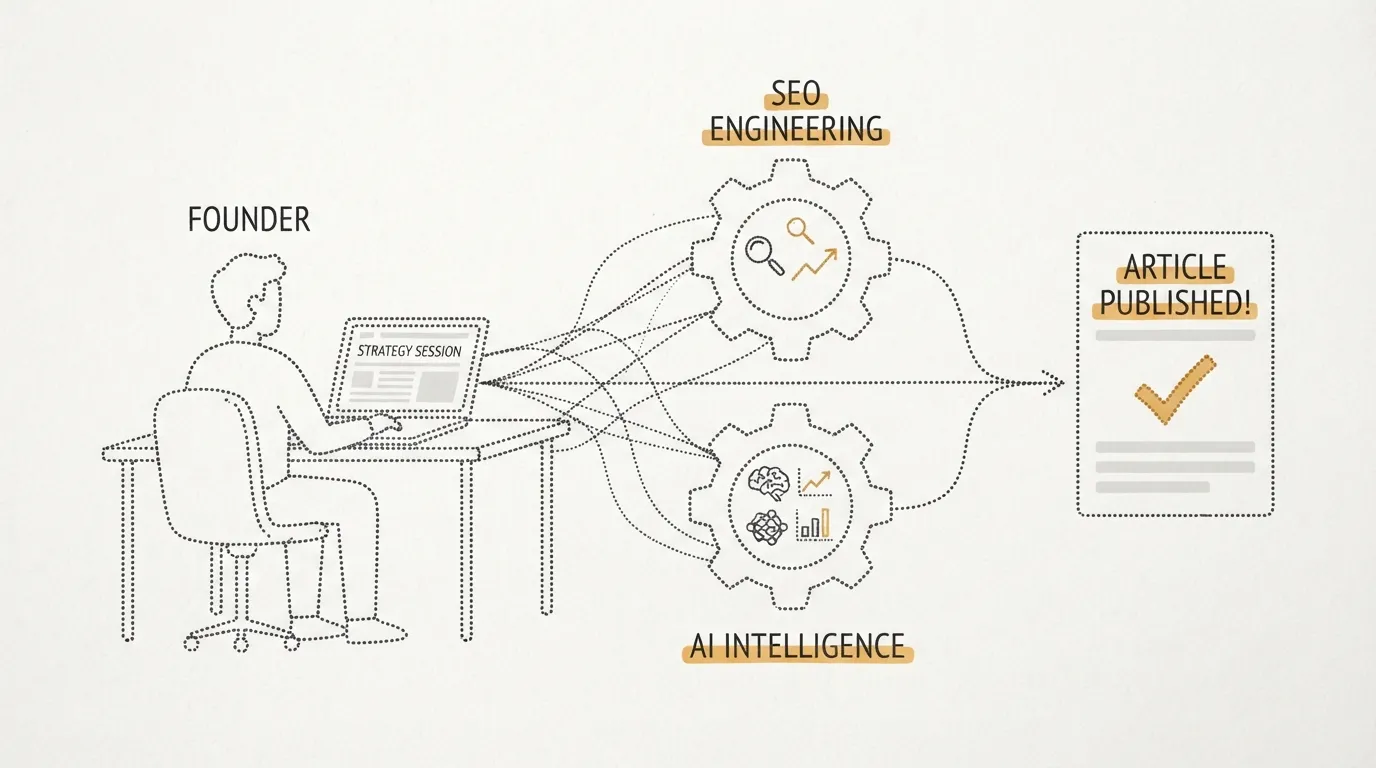
Our vision with Simple Blogs is straightforward: put the combined power of SEO engineering and AI intelligence directly into the hands of non-technical operators.
Instead of wrestling with bloated CMS plugins or blank text editors, a founder can bring their raw domain knowledge, collaborate with an AI workflow that handles keyword research, structural flow, strict metadata limits, and custom visuals, and publish content built to surface in both Google and AI agents.
To be completely fair, true SEO gurus understand deep technical strategy and competitive link-building that no automated tool replaces, and we do not claim to replace top-tier specialists. What this system does let you do is easily beat an average digital agency, without waiting months or burning your runway before you are ready to scale.
Already Running Live on This Blog
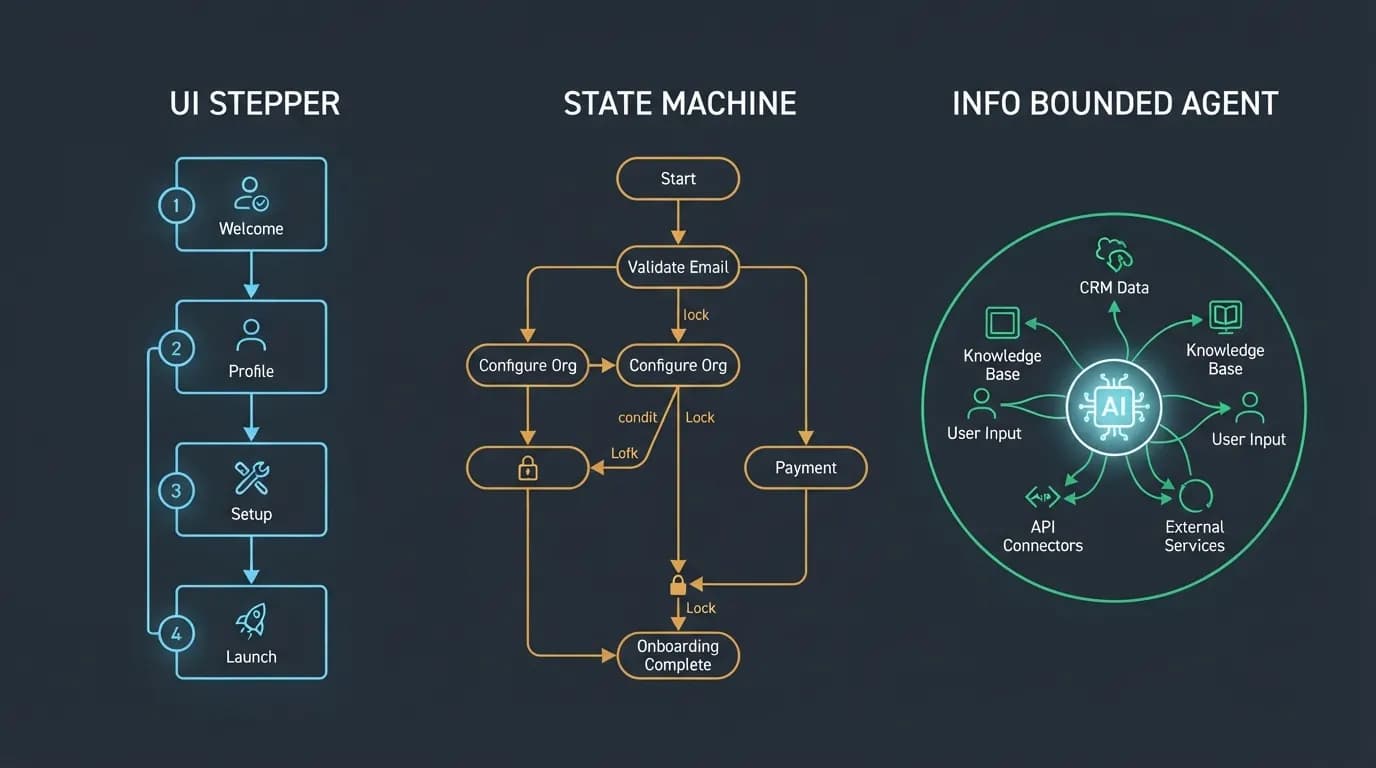
We are not pitching a concept slide deck. Every recent piece on this site, from our deep dive on information-bounded AI onboarding agents to our guide on privacy-first subscription tracking without bank access, was researched, structured, illustrated, and published through this exact platform.
We are still refining the workflow, polishing the final product name, and locking in a public launch timeline. Until then, we are dogfooding it daily in public so that when your brand is ready to build forever content that AI agents actually cite, the engine is battle-tested and ready to go.
Insights, Playbooks, Tips & Kits
Want real patterns from my journey building and selling SaaS & apps. DIY playbooks, code-ready starter kits, and the operational moves that let you scale without the overhead. For builders who learn best from firsthand mistakes, real wins & experience.