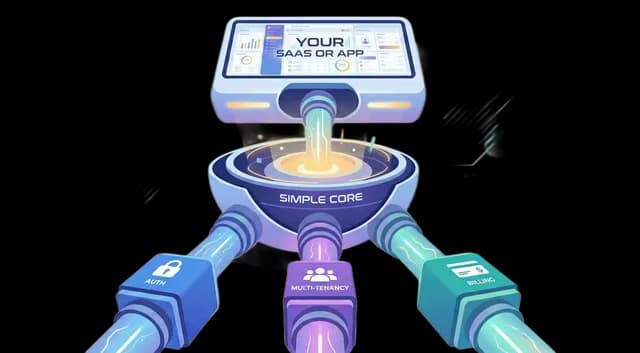

Every technical founder knows the tax of starting a new software product.
Before you write a single line of your actual core value proposition, you spend weeks assembling the exact same commodity infrastructure:
- Wiring up authentication (email passwords, OAuth callbacks, session persistence).
- Integrating payment gateways (Stripe webhooks, Paddle checkout, Lemon Squeezy).
- Implementing multi-tenant boundaries (tenants, team roles, super-admin overrides).
- Generating API keys, rate-limiting tokens, and machine-to-machine (M2M) credentials.
- Maintaining vendor SDKs that constantly deprecate endpoints or alter compliance rules.
I built Simple Core because I was tired of paying this tax myself.
My goal was straightforward: build the unified plumbing engine I desperately wanted for my own upcoming product launches, while offering it as a pluggable backend for other indie developers and small teams.
One clean OpenAPI specification. One dashboard to declare your products. Instant, pluggable vendors running on top of self-hosted Supabase.
I took the architecture from zero to nearly 90 percent completion. The core backend worked. Multi-vendor payment abstraction was operational. API key management, auto-tenant creation, and M2M tokens were humming. The beta was within touching distance.
And then, I halted development and shelved the launch.
This is a candid post-mortem on what Simple Core actually built, why a technically sound, highly marketable Backend as a Service (BaaS) stalled before reaching customers, and the lessons learned about premature abstraction.
The Vision: A Universal Adapter for Founder Plumbing
The core thesis behind Simple Core was not to replace specialized vendors. Stripe, Paddle, Better Auth, and Firebase are incredible at what they do.
The problem is the glue code.
When you launch multiple web apps, internal tools, or mobile products, you end up maintaining five different vendor dashboards, reconciling incompatible webhook payloads, and repeatedly writing boilerplate handlers. Services like RevenueCat solved this brilliantly for mobile in-app purchases, but web and cross-platform founders were still left stitching everything together manually.
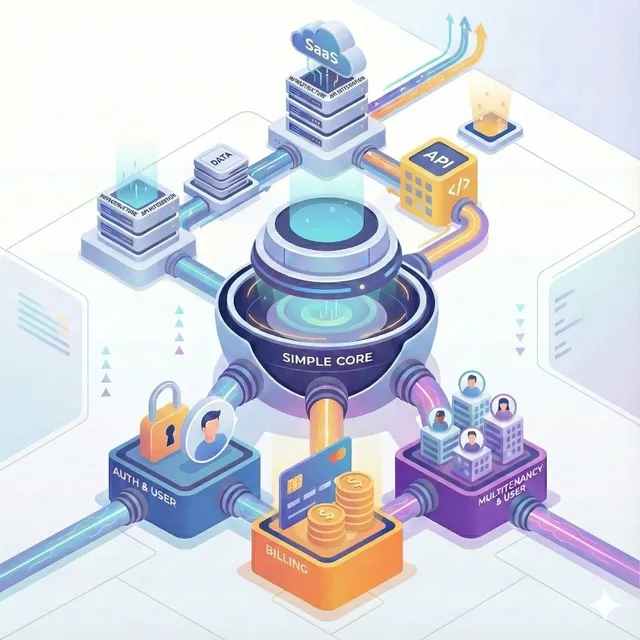
Simple Core operated as a single abstraction layer:
- Pluggable Identity with Supabase: Using self-hosted Supabase allowed founders to plug any auth provider into their system without touching client code or mutating the underlying Postgres schema.
- Unified Payment Engine: A standardized payment adapter supporting Stripe, Paddle, and Lemon Squeezy through a single API contract. It handled discount codes across any provider, synchronized subscription status, and allowed live switching between payment processors.
- Automatic Multi-Tenancy and Teams: Every user registration automatically generated a tenant and a default team, assigning owner and admin roles out of the box with zero boilerplate.
- Two-Tier Super Admin System: Built-in middleware protecting platform management endpoints, giving platform operators super-admin tenant status alongside regular tenant admin controls.
- Developer Control Plane: One click in the dashboard spun up an authentication and payment server ready for your product and marketing site, complete with M2M security, rate-limiting, and an OpenAPI 3.0 contract.
The Developer Experience: Spawning a Backend in Minutes
The original promise of Simple Core was dead simple: take a founder from concept to a production-ready subscription backend in three distinct steps.
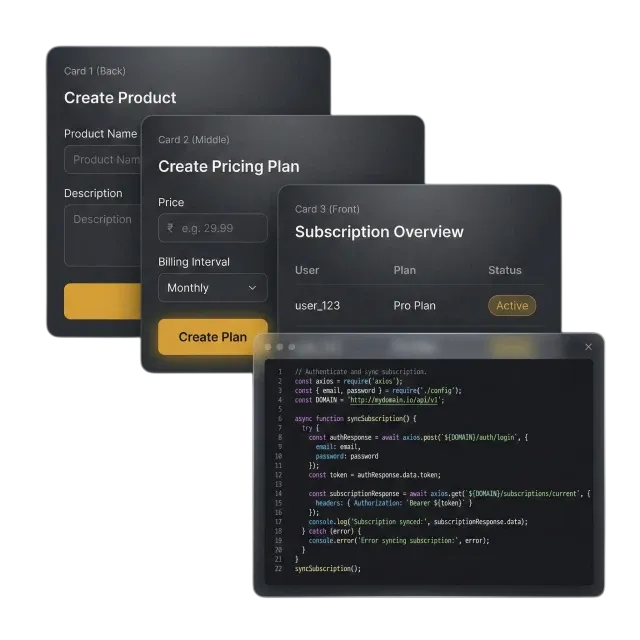
- Spawn in Clicks (Create Product): Define your product name and description in the developer console. Simple Core provisioned isolated API keys and webhook listeners.
- Configure Commercial Plans (Create a Plan): Set currency, price tiers, and billing intervals (monthly, yearly). The platform registered the product with your chosen payment gateway automatically.
- Instant Subscription Management: Query customer subscription state, entitlements, and renewal statuses through a unified client library.
Integrating with your frontend application required only a few lines of code:
// Integrate with Simple Core APIs
const axios = require('axios');

async function syncSubscription() {
  // 1. Authenticate user
  const authResponse = await axios.post(`${DOMAIN}/auth/login`, {
    email: '[email protected]',
    password: 'Password123!'
  });
  const token = authResponse.data.access_token;

  // 2. Query active subscription status
  const subscriptionResponse = await axios.get(`${DOMAIN}/subscriptions/current`, {
    headers: { Authorization: `Bearer ${token}` }
  });

  console.log('Subscription synced:', subscriptionResponse.data);
}

syncSubscription();
Under the Hood: The Architecture That Worked
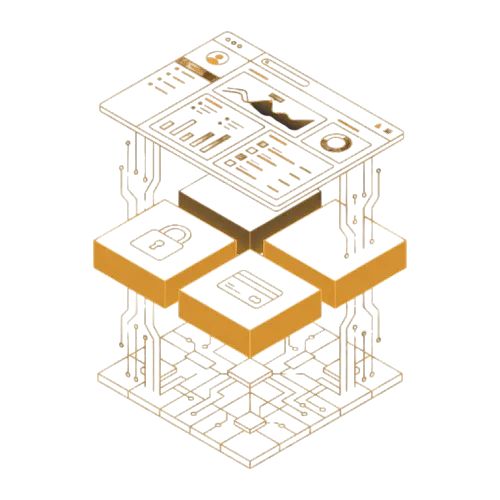
The backend was designed around clean TypeScript modules and OpenAPI compliance. Everything a developer needed was accessible via predictable endpoints running on port 4040.
1. Dual Mode Authentication
Simple Core auto-detected client context to eliminate auth friction:
- Cookie Mode: Default for web browsers, setting secure HTTP-only cookies with zero token handling required on the client.
- JWT Mode: Triggered via query parameters or
Accept: application/jsonheaders, returning access and refresh tokens for mobile apps and single-page applications.
2. Streamlined OAuth and SSO Handshakes
Instead of forcing founders to configure provider redirects inside their client code, Simple Core proxied the entire handshake:
- Client calls
GET /auth/oauth/:provider/urlto fetch the authorized provider URL. - User authenticates with Google or GitHub.
- Provider redirects back to client, which posts tokens to
POST /auth/oauth/callback. - The backend verifies credentials with Supabase, syncs the user to the local Postgres database, creates the tenant and default team, and returns full user session data.
3. The Modular Codebase and Git Commit Reality
Underneath the API, the repository was organized into domain-specific modules:
auth.tsandsupabase.tsfor identity abstraction.billing/,subscription.ts,plan.ts, andaddon.tsfor commercial tiering.tenant.ts,tenant-admin.ts, andteam-admin.tsfor organizational scoping.entitlement.tsandusage.tsfor metering and feature gating.
Looking back at my git commit log from that period reveals the exact psychological trap:
Nice setup of auth - abstraction layer setupsome good progress finallyjust committing to save unfinished work(repeated acrossaddon.ts,entitlement.ts,plan.ts,subscription.ts,team-admin.ts,tenant-admin.ts,usage.ts, anduser-admin.ts)
That recurring commit message was the telltale symptom of scope creep. Every individual module represented a legitimate SaaS capability, but building them all simultaneously turned a focused developer utility into an endless engineering marathon.
Mistake 1: The Premature Consumer Dashboard
The most expensive mistake I made was confusing the product with the interface.
Simple Core was fundamentally a developer utility: an API and an SDK. Its job was to make backend plumbing invisible so founders could ship products faster.
Instead of keeping the surface area lean, I convinced myself that Simple Core needed a consumer-facing billing and account dashboard out of the box, similar to how massive enterprise platforms offer centralized customer account portals.
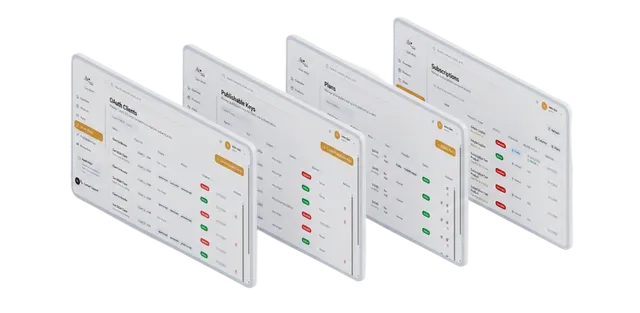
This introduced compounding friction:
- Brand UI is Personal: Every founder wants their checkout, customer profile, and billing settings to match their unique product design system. A prefabricated consumer dashboard is rarely what developers actually want to drop into their applications.
- Payment Approval Domain Conflicts: Payment gateways like Stripe and Paddle approve accounts based on the specific domain of the product being sold. Funneling consumer transactions through a secondary platform dashboard complicated merchant-of-record boundaries and domain verification.
- Massive Maintenance Burden: Instead of focusing on SDK performance, webhook reliability, and documentation, weeks of valuable development time were consumed building frontend views, responsive styling, and state management for screens that users preferred to build themselves.
The product was the API. The consumer dashboard was premature abstraction masquerading as completeness.
Mistake 2: The Unfunded BaaS Reality
The second friction point was operational.
Offering a self-hosted codebase is one thing; operating a hosted Backend as a Service is an entirely different business model.
A BaaS platform holds the crown jewels of other businesses: customer credentials, active payment subscriptions, and critical API traffic. The moment you ask a founder to route their live production payments and authentication through your hosted infrastructure, you take on immense operational responsibility:
- 24/7 uptime expectations and immediate incident response.
- Strict security auditing, compliance, and credential token isolation.
- Unpredictable multi-tenant compute, egress, and database scaling costs.
As a bootstrapped builder without venture backing, supporting a full hosted BaaS infrastructure alongside other products was simply unsustainable. It introduced immense mental overhead and financial risk that diverted attention from shipping focused, high-leverage products.
The Pivot: From Stale Project to Open Source
At 90 percent completion, I had to be honest with myself.
The product solved a genuine problem. It was stable, well-architected, and addressed a real pain point that every builder faces. But I did not have the marketing bandwidth to scale a BaaS company, nor did I want to carry the 24/7 infrastructure liability of an unfunded hosted platform.
I halted active development and pivoted my focus to products with faster paths to market and lower operational overhead.
Freezing a project where you poured weeks of deep engineering is difficult. But letting sunk costs dictate your roadmap is far worse.
Simple Core is not dead; it is deferred. Because the architecture and vendor abstraction code are solid, my plan is to clean up the proprietary quirks, strip out the consumer dashboard bloat, and release Simple Core as a self-hostable, open-source foundation.
That way, founders can take the plumbing code, run it on their own Supabase clusters, and launch their products with total ownership and zero vendor lock-in.
Sometimes the best lesson a builder can learn is not how to write more code, but recognizing when to let an abstraction go.
Insights, Playbooks, Tips & Kits
Want real patterns from my journey building and selling SaaS & apps. DIY playbooks, code-ready starter kits, and the operational moves that let you scale without the overhead. For builders who learn best from firsthand mistakes, real wins & experience.