Most React Native starter kits pick one side. Either they target experienced mobile engineers with bare templates and zero onboarding, or they wrap everything in heavy visual abstractions that fall apart the moment an engineer wants to customize the data layer.
With Simple Expo Kit (SEK), our goal has always been a clean, strictly typed Expo scaffold that wires the painful infrastructure (Firebase, Supabase, RevenueCat, FCM V1, and Expo Router) without locking you into a bloated UI library.
As more vibecoders using Cursor, Claude Code, Codex, and Antigravity pick up mobile development alongside seasoned React Native developers, we have been exploring how to evolve Simple Expo Kit for both groups without compromising either side. Everything below represents exploratory directions we are considering for future releases, not a locked-in promise. Some of these ideas may ship as described, some may change, and some may stay out if they add unnecessary weight.
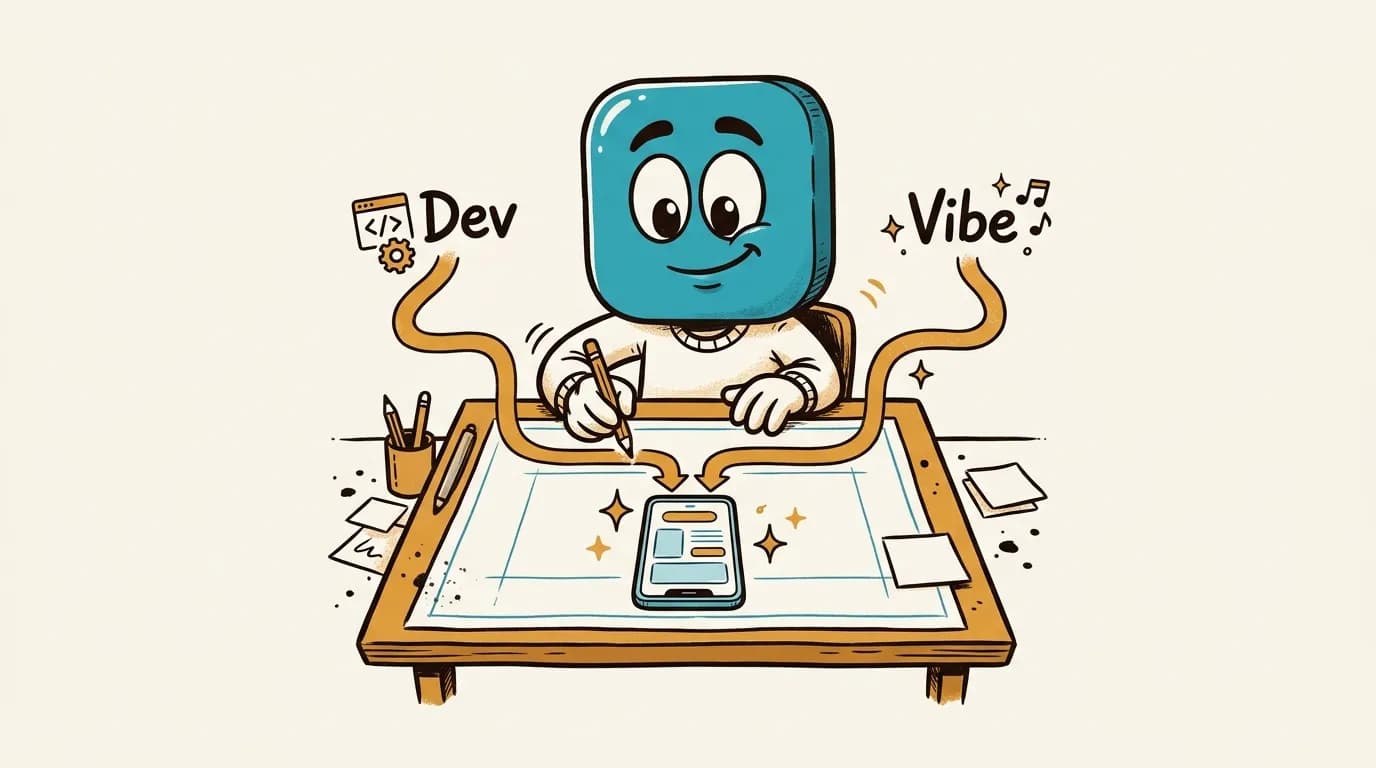
Why Vibecoders and Devs Hit Different Walls
Both audiences want to ship to the App Store and Google Play faster, but they stall at completely different places:
| Layer | What Experienced Devs Want | What Vibecoders Want |
|---|---|---|
| First 5 Minutes | Clean firebaseDB.ts and supabaseDB.ts abstractions with strict .env validation | An instant Demo Mode to preview Auth, Dashboard, and Paywall before touching Firebase or EAS |
| Stack Selection | Freedom to pick Firebase or Supabase without forced lock-in | A setup script or prompt that isolates one backend so AI agents do not edit the wrong provider |
| AI Context | Predictable folder structure, strict TypeScript, and Zod schemas | Agents.md, .cursor/rules, and copy-paste setup prompts tied to real docs |
| Backend and AI | Typed Edge or Cloud Functions with server-side entitlement checks | One pre-wired AI proxy endpoint so API keys never leak into client bundles |
| Quality and Release | GitHub Actions EAS Build workflow plus a Maestro E2E smoke test | Plain-English preflight checks for SHA-1, iosUrlScheme, and missing .env keys |
As AI Mobile Launcher's Cursor boilerplate rubric highlights, an AI coding assistant is only as reliable as the codebase rules and folder predictability you put in front of it. That lines up directly with what senior engineers want too: explicit contracts, zero magic, and fast verification.
Five Directions We Are Exploring for Simple Expo Kit
1. An Instant Demo Mode
Right now, Simple Expo Kit requires setting up Firebase, SHA-1 fingerprints, eas credentials, and Supabase before the full app flow comes alive. For an engineer, that takes 15 to 20 minutes. For a vibecoder who just wants to prompt a new dashboard layout on day one, that setup wall kills momentum.
One direction we are exploring is shipping typed mock adapters behind our existing Auth, Database, and RevenueCat interfaces. Flipping EXPO_PUBLIC_DEMO_MODE=true would let anyone preview onboarding, login, CRUD screens, and the paywall immediately, while experienced devs simply turn it off when wiring production keys.
2. A Preflight Doctor Script
Most support questions in Expo and Firebase come down to deterministic config mismatches: a missing google-services.json, admin/google-service-key.json placed in the root instead of admin/, an outdated SHA-1 fingerprint, or a full .apps.googleusercontent.com string pasted into iosUrlScheme.
A lightweight Node preflight script (npm run doctor) could inspect .env, app.json, and local key files, then print exact pass or fail diagnostics. Humans get instant clarity, and AI agents stop burning tokens guessing which file is misconfigured.

3. Clean Stack Isolation (Firebase vs. Supabase)
Having both Firebase and Supabase wired in Simple Expo Kit gives builders real flexibility. The trade-off is surface area: when an AI agent scans a repo containing both firebaseDB.ts and supabaseDB.ts, it can occasionally wire a new screen to the wrong provider.
We are considering a simple init step (npm run configure:stack) that lets you choose Firebase, Supabase, or both, and cleanly archives or removes the unused provider files so your repository stays lean for both human teams and LLM context windows.
4. Bundled Open Agent Skills
Simple Expo Kit already ships an Agents.md architecture guide, and Expo's own AI agent skills plus the Expo MCP server have shown how effective modular skill files are across Claude Code, Cursor, and Codex.
Pairing Agents.md with focused in-repo skills for setup, adding new CRUD screens, configuring RevenueCat products, and upgrading Expo SDKs (linking directly to guides like our Firebase & Firestore AI Prompts) would let vibecoders trigger repeatable workflows instead of writing long prompts from scratch.
5. Private GitHub Repo Delivery and a Minimal CI Baseline
Experienced developers expect git history, tagged SDK releases, and a baseline test and CI setup. Meanwhile, vibecoders benefit from automated checks that catch AI-generated regressions before a build fails on EAS.
Moving higher tiers to private GitHub repository access with a starter GitHub Actions EAS Build workflow and one Maestro E2E smoke test is on our radar as a clean way to raise the quality floor for everyone without adding UI bloat.
What Is Live Today vs. Exploratory
To be completely transparent about where things stand right now:
- Live today in Simple Expo Kit: Expo SDK 55, Expo Router, strict TypeScript, NativeWind light/dark tokens, dual Firebase and Supabase wiring, FCM V1 + Expo Push notifications, RevenueCat paywalls,
Agents.md, and step-by-step setup documentation. - Exploratory directions (may or may not ship):
EXPO_PUBLIC_DEMO_MODE,npm run doctor, provider isolation scripts, bundled in-repo agent skills, and private GitHub repo CI baselines.
If you are already building with Simple Expo Kit, tell us which of these directions would save you the most time on your next app.
Insights, Playbooks, Tips & Kits
Want real patterns from my journey building and selling SaaS & apps. DIY playbooks, code-ready starter kits, and the operational moves that let you scale without the overhead. For builders who learn best from firsthand mistakes, real wins & experience.